
The tax vacancy of a property is not declared: it must be proven, piece by piece, in front of an administration that has had a lever for reclassification as a secondary residence since 2023. Obtaining a certificate of non-occupation requires mastering both the municipal administrative circuit and the creation of a solid evidence file capable of withstanding scrutiny or contestation.
Reclassification as a secondary residence: the tax risk that owners underestimate
Since the complete abolition of the housing tax on primary residences on January 1, 2023, the tax administration has focused its checks on properties declared vacant. A property that does not meet the vacancy criteria can be reclassified as a secondary residence, with the application of an increased housing tax in the affected municipalities.
The logic is simple: if the owner does not demonstrate that the property is uninhabitable or actually empty of all furniture, the tax authorities presume an occupation, even intermittent. This presumption has hardened with the recent extension of tense zones where the vacant housing tax (TLV) or municipal tax may apply.
The classic trap: an owner who leaves some furniture in an apartment awaiting renovations, without canceling energy subscriptions. The administration sees it as a furnished and habitable property, thus taxable. The burden of proof rests entirely on the taxpayer. To create an admissible file, it is useful to know what supporting documents to produce as certificate of non-occupation of a vacant property.
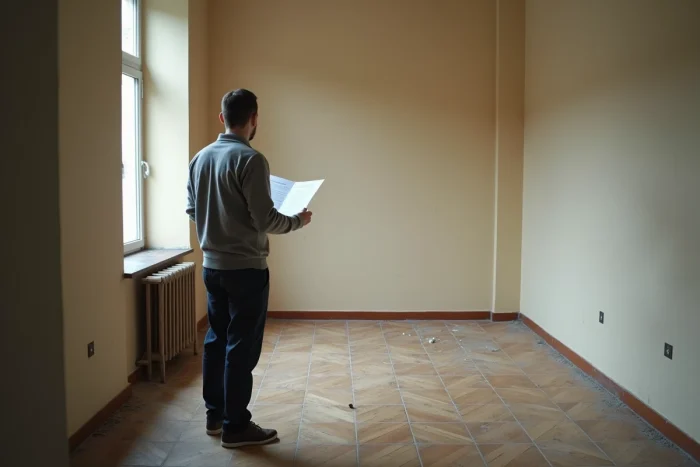
Process for obtaining the vacancy certificate from the town hall
The certificate of non-occupation is a document issued by the municipality, not by the tax administration. The town hall verifies the state of the property on a given date, usually on January 1 of the tax year.
Documents required for the application
The standard file required by municipal services includes:
- A copy of a valid identification document of the owner or the outgoing tenant.
- A proof of ownership or enjoyment of the property (property tax notice, terminated lease, notarial deed).
- Contact details to arrange an inspection appointment with municipal services.
The on-site appointment is crucial. The municipal agent visually verifies that the property is empty of all furniture and uninhabited. If the property still contains furniture, even residual, the certificate will be refused.
Deadline and scope of the document
It is advisable to submit the application as soon as the property is emptied, without waiting for the tax notice. The municipal certificate does not have binding legal value for the tax authorities, but it constitutes a key piece of evidence in the contestation file. Some municipalities directly transmit the information to the public finance center, while others allow the taxpayer to attach the document to their claim.
Creating a file of vacancy evidence that withstands tax scrutiny
The certificate alone is not enough. It must be part of a coherent body of evidence. The administration evaluates vacancy on a case-by-case basis, without a standardized grid, which requires anticipating every angle of contestation.
Direct material evidence
- A bailiff’s report (justice commissioner) describing the state of the premises: absence of furniture, absence of active connections, condition of the meters. This is the most difficult proof to contest.
- Timestamped photographs of each room, showing an empty property. The EXIF metadata must be preserved.
- Moving or storage invoices that demonstrate the physical removal of furniture.
Indirect evidence through consumption
The absence of energy consumption is the most decisive indirect proof. Meter readings for electricity and gas at zero, or cancellation certificates from the supplier, establish that no occupation is materially possible.
A reading showing consumption, even minimal (a few kWh related to a plugged-in refrigerator or an alarm system), may be sufficient for the administration to contest the vacancy. The outright cancellation of the subscription remains the safest strategy.
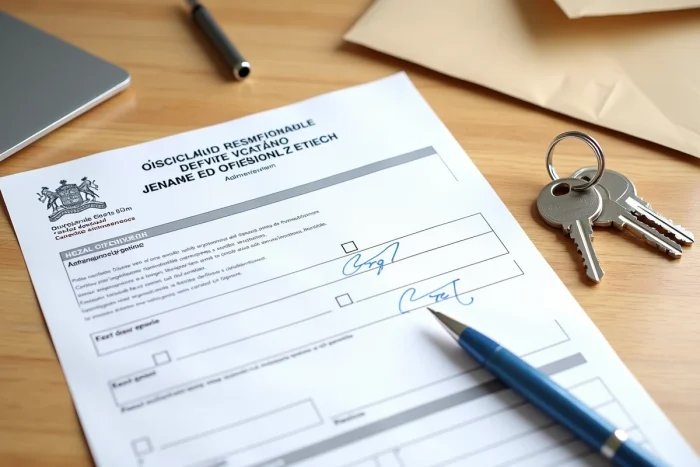
Tax on vacant properties and exemption: articulating proof and claim
The TLV applies to vacant properties for more than a year in municipalities in tense zones. Its rate increases with the duration of vacancy. To be exempted, the owner must demonstrate that the vacancy is not voluntary: property put up for sale or rent at a market-conforming price, property requiring heavy work making occupation impossible, or property occupied for more than ninety consecutive days in the year.
Attach evidence to the claim
The claim is addressed to the public finance center to which the property belongs. It is advisable to systematically attach:
The municipal vacancy certificate, the bailiff’s report if available, energy consumption readings, and, if applicable, real estate listings proving the property is for sale or rent (dated screenshots on real estate portals, signed agency mandate). A complete file significantly reduces the risk of rejection of the claim.
For properties requiring work, quotes or invoices from contractors attest to the uninhabitable nature of the property. A building permit or a prior declaration filed at the town hall strengthens the credibility of the argument.
The distinction between involuntary vacancy and voluntary vacancy remains the central criterion for the administration. A property empty for several years without any effort to put it on the market will receive no leniency, regardless of the number of bailiff reports produced. Proving the vacancy and proving the effort to bring it back to market are two complementary requirements that the file must satisfy simultaneously.