
New Year’s Eve 2026 is approaching, and the choice of the party format affects both the budget, the administrative procedures, and the atmosphere of the night. A private party refers to an event reserved for a small circle of identified guests, accessible by invitation only. A public party, on the other hand, is open to anyone wishing to participate, whether it is free or paid. This distinction, far from being trivial, leads to very different legal obligations for the organizer.
Noise regulations for a private New Year’s Eve celebration at home
Hosting friends at home for December 31 does not exempt one from adhering to noise regulations. The Public Health Code, through article R. 1336-5, penalizes noise that disturbs the tranquility of the neighborhood due to its duration, repetition, or intensity, even in a private setting.
In other words, organizing a New Year’s Eve celebration at home does not guarantee the ability to play music until the early morning. The tolerated hours and thresholds of tolerance vary from one municipality to another, as local authorities supplement the national framework with local decrees. Before turning up the volume, checking the municipal regulations remains a useful precaution, especially in a collective building where the co-ownership rules may impose their own restrictions.
By launching a search on Max Trucs, it is possible to quickly compare the formats of organized parties around you and evaluate the constraints before committing.
Public New Year’s Eve party: obligations the organizer must anticipate
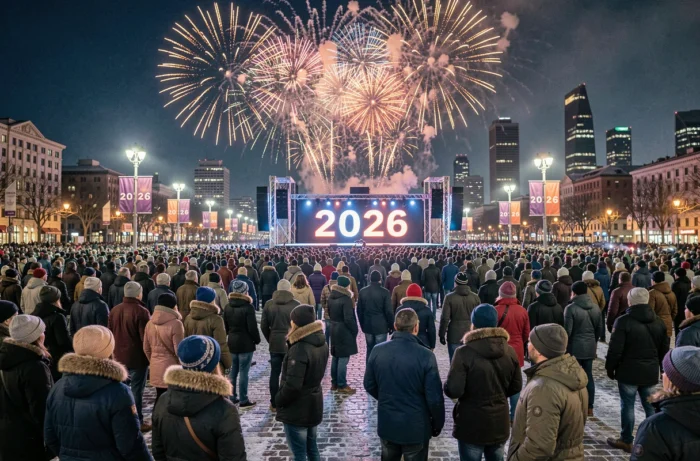
Once an event is open to the public, the administrative procedures scale up. The organizer generally must declare the event at the town hall, and the requirements regarding participant safety increase: fire access, emergency exits, controlling the number of attendees.
The sale of beverages is often underestimated. For an association running a temporary bar during its own event, the mayor’s authorization is mandatory, and only beverages from groups 1 and 3 can be served. The number of bar authorizations is capped at five per year per association.
A club or association that has already organized several events in the year may find itself legally unable to serve alcohol on New Year’s Eve.
For paid public parties, the organizer must also check their obligations regarding insurance and ticketing. A public party engages the civil liability of the organizer in case of an incident, whether it be an injury or a public order disturbance.
Budget and atmosphere: what distinguishes the two formats
The choice between private and public is not just about paperwork. The practical implications directly affect the wallet and the type of night one experiences.
- In a private party, the budget is shared among the guests: food, champagne, decoration. The organizer controls the guest list, the end time, and the noise level (within regulatory limits). The atmosphere entirely depends on the group gathered.
- In a public party (club, community hall, association event), the cost per person often includes an entry fee, sometimes a beverage package. The atmosphere is driven by a DJ, a theme, or entertainment, but the organizer does not control who will be present in the venue.
- The hybrid format, a party in a rented venue with a closed guest list, combines some advantages of both: suitable space, controlled entries, but requires checking if the venue imposes its own constraints (hours, noise level, mandatory catering).

The trap of legal requalification
An often-overlooked element deserves special attention. Even when planning to organize a private party, a judge may requalify the event as a public party if, in fact, access was widely open. Publishing the address on social media, allowing strangers to enter, or selling tickets legally transforms the nature of the celebration, along with all the obligations that follow.
This risk of requalification implies maintaining strict control over the guest list and communication surrounding the event. An invitation shared in an open Facebook group can sometimes be enough to change the status.
Criteria for choosing for New Year’s Eve 2026: private or public
The right format depends on a few concrete variables that it is better to lay out before making a decision.
- The number of participants: below twenty people, the private format remains the easiest to manage. Beyond that, the question of venue and logistics pushes towards a semi-public or public framework.
- The noise tolerance of the environment: apartment in the city center, isolated house, or rented hall, the context changes everything. Municipal decrees on nighttime noise remain applicable even on New Year’s Eve.
- The available budget: a well-organized private party can cost less per person than entry to a club, but the logistical burden (shopping, preparation, cleanup) falls on the host.
- The desire for surprise or control: a public party offers the unexpected (meetings, entertainment, imposed theme), while the private allows for calibrating every detail, from the playlist to the midnight menu.
The chosen format also determines the management of the end of the night. At a public party, the return depends on available transportation. In a private setting, the question of guest accommodation or safe return remains the host’s responsibility, a point that many organizers underestimate on the night of December 31.
New Year’s Eve 2026 benefits from being thought of as a balance between organizational freedom and regulatory framework. A private party offers more control but does not exempt from noise rules or liability in case of an incident. A public or associative party provides a turnkey atmosphere, at the cost of administrative procedures and an entry budget. In both cases, success relies less on the format than on its preparation.