The labels on Eastpak bags rarely mention the country of manufacture in a visible way. The brand, born in the United States in the 1950s, has gone through several decades of industrial changes. Today, it is part of the VF Corporation group, which operates under a business model where design, production, and distribution follow distinct geographical logics. Understanding where Eastpak bags are made requires tracing back the supply chain of the group that owns the brand.
VF Corporation and the asset-light model applied to Eastpak
Eastpak is not an independent company. The brand belongs to VF Corporation, an American conglomerate that also owns The North Face, Vans, and Timberland. This detail changes everything in understanding the manufacturing process.
VF Corporation operates under an “asset-light” model: the group owns very few factories. The group’s annual reports indicate that investments focus on branding, design, and distribution. Manufacturing is entrusted to a network of partner suppliers located in regions with competitive costs.
For Eastpak, this means that backpacks, suitcases, and accessories do not come from a factory labeled Eastpak. They are produced by subcontractors selected according to specifications defined by the group. To know exactly where Eastpak bags are made, one must trace these various production steps. This operation model is shared by almost all brands of luggage and consumer accessories.
Eastpak production in Asia: concerned countries and industrial logic
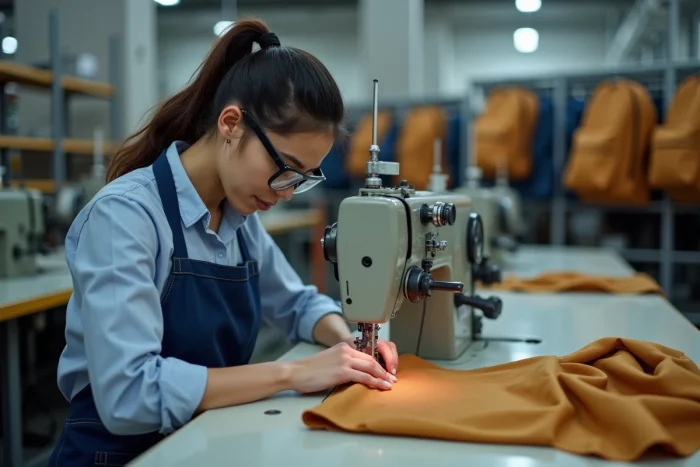
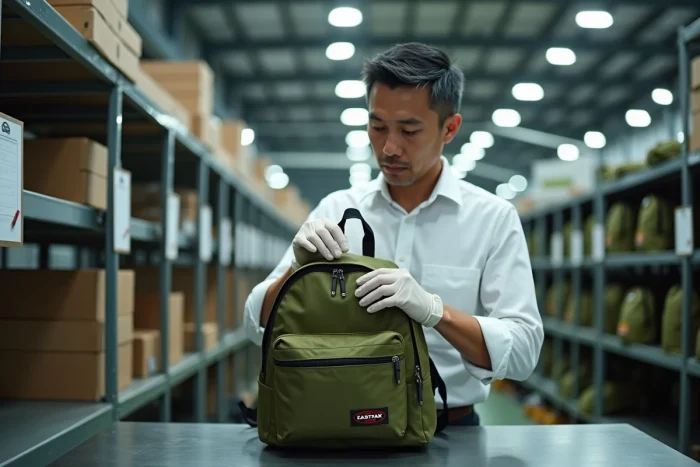
VF Corporation’s reports explicitly mention that the production of “backpacks and bags” is outsourced to partner factories in Asia. The countries mentioned in this context include China, Vietnam, and Bangladesh.
The brand does not publicly communicate the exact distribution of volumes among these countries. The available data does not allow for determining which model comes from which factory. However, the logic is clear: VF Corporation distributes its production among several sites to limit risks associated with dependence on a single supplier or country.
Why Asia and not the United States
Eastern Canvas Products, the ancestor of Eastpak founded in 1952, manufactured its bags in the United States, initially for the Pentagon. That era is over. American production has been abandoned in favor of Asian outsourcing, a common movement across the textile and leather goods sector since the 1990s.
The group justifies this choice by the pursuit of operational efficiency. Producing in Asia allows for maintaining accessible retail prices (Eastpak bags remain positioned in the mid-range segment) while generating sufficient margins to finance marketing and distribution.
Supplier consolidation and Eastpak quality control
VF Corporation describes in its latest reports a strategy of reducing the number of strategic suppliers. The stated goal: to consolidate partnerships with a limited number of factories to better control quality and timelines.
This consolidation has concrete implications for Eastpak:
- Fewer suppliers mean larger volumes per factory, giving the group leverage in negotiating prices and production conditions.
- Quality control is centralized at the group level, with audits and standards applied to all brands in the VF Corporation portfolio.
- Environmental and social certifications (such as factory audits or commitments on working conditions) are managed at the group level, not by the isolated brand.
The long-term warranty offered by Eastpak, often highlighted in the brand’s communication, partly relies on this system. A bag guaranteed for several decades implies monitoring of materials and manufacturing processes over the long term.
Materials and design: what is decided before the factory
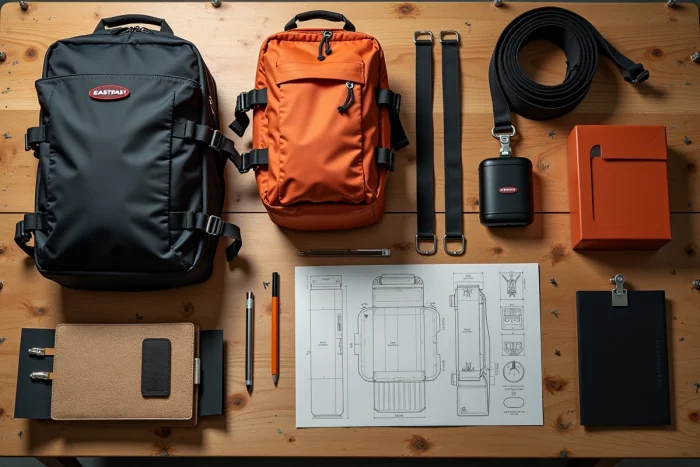
While manufacturing takes place in Asia, design remains driven from Europe and the United States. Eastpak has design teams that define models, choose materials, and validate prototypes before launching into production.
Cordura nylon, long associated with the brand, illustrates this separation between design and production. The choice of fabric and its technical specifications are defined upstream, then integrated into the specifications sent to partner factories. The factory executes but does not decide on the material.
Traceability of raw materials
VF Corporation publishes commitments on the traceability of certain materials (cotton, leather, synthetic materials). For Eastpak, whose bags primarily use synthetic fabrics, traceability concerns the origin of fibers and dyeing processes. Field reports vary on the actual level of transparency: the group communicates global objectives, but data by brand remains poorly detailed.
In recent years, the brand has introduced ranges using recycled materials, notably polyester made from plastic bottles. This approach aligns with VF Corporation’s environmental commitments, which set targets for reducing carbon footprint across the portfolio.
What the “Made in” label does not say about an Eastpak bag
An Eastpak bag purchased in France typically bears a “Made in Vietnam” or “Made in China” label. This legal indication informs about the last country of assembly, not about the entire value chain.
The fabric may come from one country, the zippers from another, the padding foam from a third. The final assembly, which determines the label’s mention, is just one step among others. For a brand like Eastpak, whose bags combine several technical components, the notion of a single country of manufacture is reductive.
This reality is not unique to Eastpak. It concerns the majority of luggage brands sold in Europe, whether positioned in the entry-level or higher segments. The difference between brands lies less in the place of production than in the level of requirements of the specifications sent to suppliers, and in the rigor of controls applied at the factory exit.