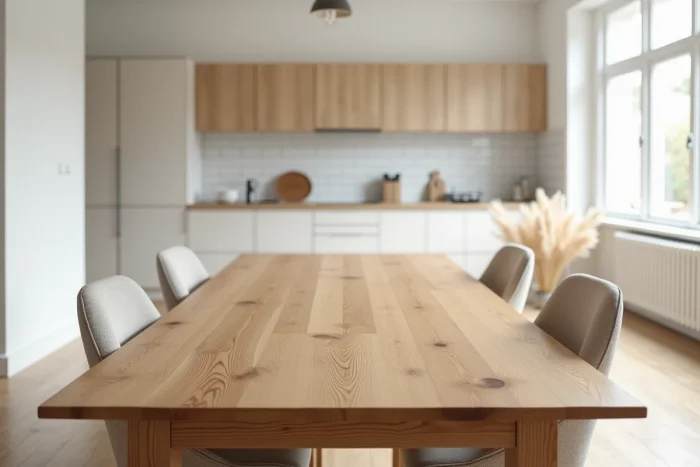
A designer wooden table is defined by the combination of a worked wood species and an aesthetic choice regarding the base, proportions, or finish. The choice relies on three technical parameters: the type of wood, the geometry of the tabletop, and the type of surface treatment. These criteria determine both the durability of the furniture and its ability to integrate into a specific decorative style.
Wood Traceability and Certifications: What Changes for Designer Tables
Before comparing wood species or shapes, a parameter often overlooked in decor guides deserves special attention: the origin of the wood. The European Regulation on Imported Deforestation (EUDR), adopted in 2023, imposes enhanced traceability obligations on wood and derived product importers, including furniture.
Specifically, manufacturers must prove that the wood used does not come from deforested areas after the end of 2020. This constraint pushes designer wooden table brands to document the geographical origin of their species and to favor local or certified woods.
For consumers, two logos serve as reliable markers: FSC and PEFC. ADEME explicitly recommends checking for their presence on wooden furniture to ensure sustainable forest management. A French oak tabletop certified by PEFC and an imported acacia tabletop without certification do not offer the same environmental guarantee, even if their visual appearance may be comparable.
Specialized brands in wooden furniture are now incorporating these certifications into their catalogs, as can be seen on https://www.kalinoe.fr/ which offers a selection focused on responsible materials.
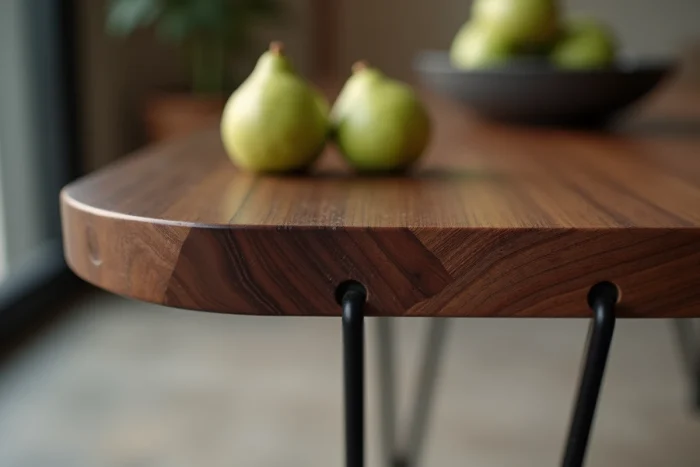
Wood Species and Finish: The Pair That Determines the Look of a Designer Table
The term “wood” encompasses very different realities. For a dining table or a coffee table, the choice of species determines the natural hue, hardness, and aging of the tabletop.
Three Families of Species to Distinguish
- European hardwoods (oak, beech, ash) offer high resistance to shocks and scratches. Solid oak remains the reference for designer dining tables due to its pronounced grain and ability to take on different shades depending on the finish.
- Exotic woods (American walnut, acacia, mango) bring darker or more contrasting shades. Their availability directly depends on supply chains, and it is on these species that the issue of certification becomes crucial.
- Softwoods (pine, fir) are suitable for occasional tables or low tables that are not heavily used. Their lower price comes at the cost of increased sensitivity to everyday wear marks.
Oiled, Varnished, or Waxed Finish: Different Performances
The finish determines both the feel and the durability. An oil penetrates the fiber and maintains the natural look of the wood, but requires regular maintenance. A matte varnish effectively protects against stains and simplifies cleaning, at the cost of a surface film that slightly alters the feel.
Wax gives a warm satin finish, suitable for coffee tables that are less exposed to spills. For a dining table used daily by a family, matte varnish or a durable oiled finish remains the most pragmatic options.
Tabletop Geometry and Base: Adapting the Table to the Space
The shape of the tabletop is not just a matter of taste. It determines the flow around the furniture and the actual number of guests.
A rectangular tabletop remains the most common format for dining tables because it naturally aligns against a wall or in the center of a long room. A round tabletop promotes conviviality in a square or open space, but it occupies more floor space for the same number of seats.
The base radically changes the style of the same wood species. Four straight legs in oak create a clean Scandinavian effect. A central metal base under a walnut tabletop leans towards an industrial style. Tapered and angled legs evoke mid-century design.

For small spaces, extendable tables with integrated leaves allow for a transition from four to six guests without additional furniture. The quality of the extension mechanism deserves checking in-store: aluminum rail systems slide better over time than simple wooden glides.
Designer Wooden Coffee Table: Specific Selection Criteria for the Living Room
The coffee table follows a different logic than the dining table. Its standard height is at the level of the sofa seat, and its tabletop serves as both a decorative and functional surface.
In a living room, the choice of wood for a coffee table can be bolder than for a dining table. A raw wood tabletop with bark (the “live edge”) works as a decorative piece without facing the constraints of daily food use.
- A solid oak coffee table with a brass base fits into a refined contemporary decor.
- A mango wood tabletop on a black metal frame suits an industrial or loft-style interior.
- For a Scandinavian living room, a model in bleached ash with simple geometric lines remains the most coherent choice.
Marble, often combined with wood in current design collections, adds a mineral touch that contrasts with the warmth of the wood. These wood-marble combinations work particularly well for coffee tables, where the weight of the tabletop is not a usage constraint.
The choice of a designer wooden table benefits from being approached as a technical as well as aesthetic arbitration. Checking the species, certification, and finish before settling on a shape avoids disappointments after a few months of use. A PEFC-certified oak tabletop, properly finished and sized for the room, will withstand changes in decor without losing its relevance.