The French regulatory framework surrounding fashion and textile decoration is evolving rapidly. Since September 1, 2026, a penalty targets ultra-fast fashion products, covering clothing, shoes, and certain home textiles. This measure, capped at half the pre-tax price with a gradual increase until 2030, encourages a rethink of how one builds a wardrobe or decorates a home.
Investing in durable and refined pieces becomes as much a matter of style as it is of alignment with new environmental requirements.
Textile and decoration penalty: what the 2026 regulation changes
The French penalty is not limited to worn clothing. It encompasses home textiles, creating a direct link between the wardrobe and interior decoration. The criteria used to qualify a product as ultra-fast fashion take into account the range of collections, the frequency of renewal, and the manufacturer’s repair efforts.
The affected platforms will need to inform consumers about repair, reuse, and the environmental impact of deliveries. A ban on advertising for these products is set to begin on January 1, 2027, although practical details are yet to be clarified.
In practical terms, buying a blanket or cushion from ultra-fast production will gradually become more expensive. In contrast, a textile piece designed to last, made from traceable materials and offering repair services, will escape this surcharge. This legal framework gives a real economic advantage to thoughtful purchases, whether it’s a wool coat or a linen bedspread. Stores like Chic Intemporel illustrate this approach by selecting pieces designed to last through the seasons without planned obsolescence.

Noble materials in fashion and decor: the criteria that make the difference
Talking about timeless style without addressing material is to overlook what distinguishes a durable piece from a disposable product. The choice of material determines longevity, touch, and repairability.
Textiles to prioritize for the wardrobe and interior
- Linen, primarily grown in Northern Europe, ages by gaining flexibility. It works well for a shirt as well as for curtains or table linens.
- Wool (merino, cashmere, alpaca) offers natural thermal regulation. A well-maintained wool sweater lasts for several years, just like a wool blanket placed on a sofa.
- Thick cotton with a dense weight (like oxford or twill) withstands repeated washes. For the home, structured cotton cushion covers retain their shape much longer than fine synthetic fabrics.
- Solid wood (oak, walnut, ash) remains the reference material for decorative furniture. A solid wood table does not go out of style and can be easily restored through sanding and treatment.
The repairability of a piece is as important as its initial aesthetics. A fabric whose weave allows for mending or a wooden piece that can be sanded and refinished fits within the circular logic encouraged by current regulations.
What touch and finish reveal
Before buying, a simple test: crumple the fabric in your hand. A quality textile returns to its shape, while a low-end fabric remains wrinkled. For furniture, running your hand over the edges and joints provides a reliable indication of the finish. Glue joints on particle board do not age like a mortise and tenon joint.
Timeless colors: building a palette that doesn’t tire
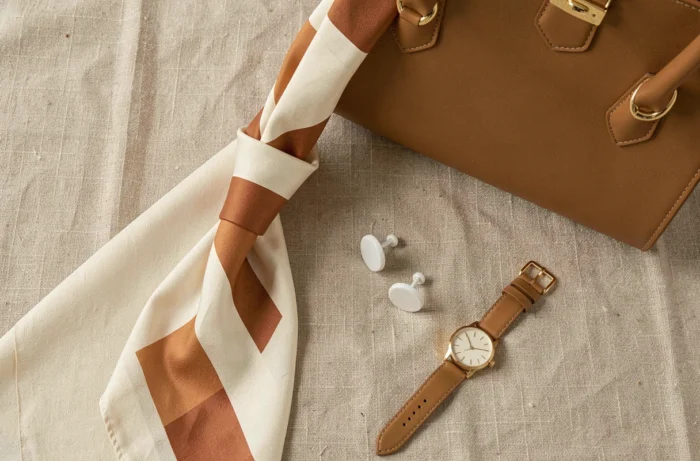
Interiors and wardrobes that stand the test of time share a common point: a limited palette of neutral colors enhanced by a few measured accents. Beige, off-white, stone gray, navy, and sage green form a foundation that works in any season.
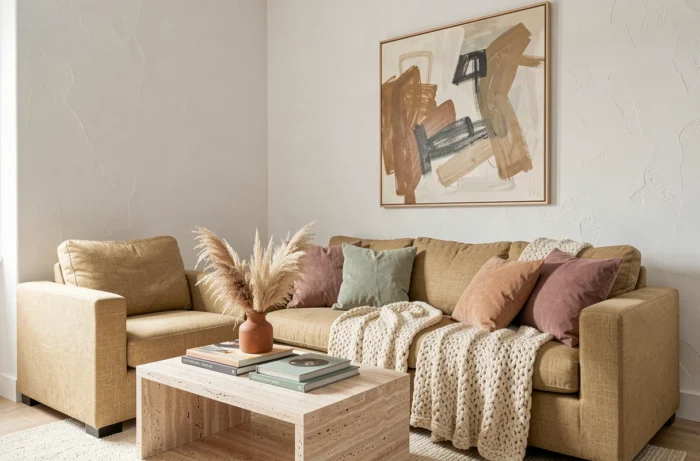
In decoration, these shades allow for a change of ambiance by modifying only the accessories (cushions, vases, candles) without touching the furniture or walls. In fashion, a wardrobe built on these bases allows for multiple combinations with a limited number of pieces.
A common mistake is to want to follow the color of the year dictated by manufacturers. A sofa purchased in a trendy color becomes dated in two seasons. The same sofa in medium gray or ecru will accommodate any cushion for a decade.
Timeless fashion and decor pieces: investments that last
Some pieces, in both fashion and decoration, function as foundations. Replacing them is costly; choosing them correctly from the start avoids subsequent impulsive purchases.
In fashion
A well-cut trench coat, a pair of full-grain leather shoes, and a cashmere knit form a trio that has worked for decades. These pieces can be repaired: a cobbler can resole, a tailor can adjust. This criterion of repairability is not trivial in a context where regulations explicitly value brands offering this service.
In interior decoration
A solid wood table, a minimalist design light fixture (mid-century lines, for example), and a rug made of natural fibers constitute structural purchases. A solid wood piece can change rooms, functions, and even finishes over the years without losing its utility value.
The available data does not allow for a universal budget to be set for these pieces. Price variations depend on the type of wood used, the origin of manufacture, and the distribution circuit. Field feedback varies on the quality-price ratio between local craftsmanship and semi-industrial European manufacturing.
Sustainable refinement relies less on accumulation than on selection. Fashion and decoration pieces that endure share noble materials, a sober palette, and the ability to be repaired. With a regulatory framework that now penalizes the ultra-fast renewal of textile collections, choosing timeless pieces is no longer just a matter of taste; it is also an economic calculation.