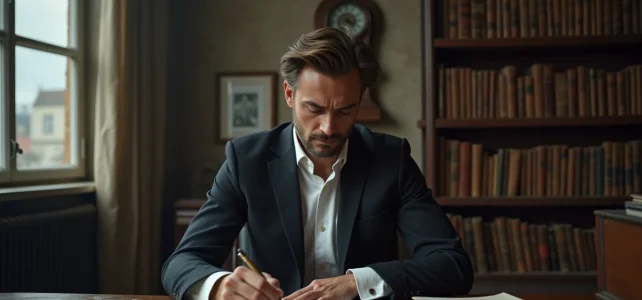
An unfinished manuscript by Franz Kafka, ‘The Trial’, was published against the express wishes of its author. This act, far from being isolated, has transformed the perception of his work and the very status of his texts.
In Prague, a dedicated museum gathers original documents, letters, and personal items, showcasing Kafka’s lasting impact on world literature. Visitors discover a legacy marked by the complexity and uniqueness of his journey.
Franz Kafka: portrait of a writer with a singular universe
Franz Kafka was born in 1883 on the cobblestones of the old city of Prague, into a German-speaking Jewish family. His tumultuous relationship with his father, poignantly expressed in the Letter to His Father, permeates each of his pages. The tug-of-war between family loyalty and the necessity to write shapes an atypical path, laid bare in a dense correspondence, particularly with Felice Bauer, the confidante of an impossible passion. Scattered notes from his diary, unfinished novels, short stories: everything in Kafka’s work stages the quest for meaning, quickly confronted by the absurdity of everyday bureaucracy.
Kafka spent most of his life working in an insurance company, an ordinary daily routine that feeds the material of his books: feelings of alienation, bureaucratic machinery, a sense of powerlessness in the face of society. Yet, the man remains of extreme discretion, almost erased behind his writings. It is thanks to the determination of Max Brod, his friend and literary executor, that works like The Trial or The Castle escaped oblivion. Marthe Robert, a recognized specialist, has highlighted the radical modernity of a universe where each story eludes understanding.
Today, the Kafkaiens scrutinize every note, every book, every unearthed manuscript, to perceive the uniqueness of a lucid voice on the human condition. Kafka, inseparable from Prague, still haunts its streets and facades. His gaze, withdrawn, continues to challenge trends and disrupt world literature.
Why do his works still fascinate today?
The writings of Kafka transcend generations, indifferent to currents and trends. The Trial, The Castle, The Penal Colony, as well as a whole series of short stories, destabilize the reader with their familiar strangeness. One finds oneself plunged into a mechanism where logic collapses, where the absurd imposes itself. Each Kafkaesque text provokes this singular vertigo: the sensation of a world tipping over, of a daily life cracking.
Universal themes, intact modernity
Here are some major themes that traverse his work and give it this unique scope:
- Alienation and solitude: characters, starting with Joseph K., confront anonymous institutions, mired in endless procedures.
- Identity and guilt: the quest for meaning, the anxiety of being judged, mark each novel and each story.
- Bureaucracy: the coldness of administration crushes the individual, a theme that resonates with many current experiences.
The modernity of Kafka lies in his way of capturing existential anxiety. His masterpieces continue to fuel analyses, adaptations, and new readings. Claude David and Marthe Robert, among others, have shown how his stripped-down language, the constant tension, and the absence of resolution make each book a trial for the reader.
What captivates is this paradox: his texts seem closed in on themselves, yet they open up to an infinity of interpretations. Reading Kafka means accepting uncertainty, fragility, and sometimes even biting humor. Current re-readings emphasize his power of dissent and his universality. The work, always in motion, refuses to provide a definitive explanation of the human condition.
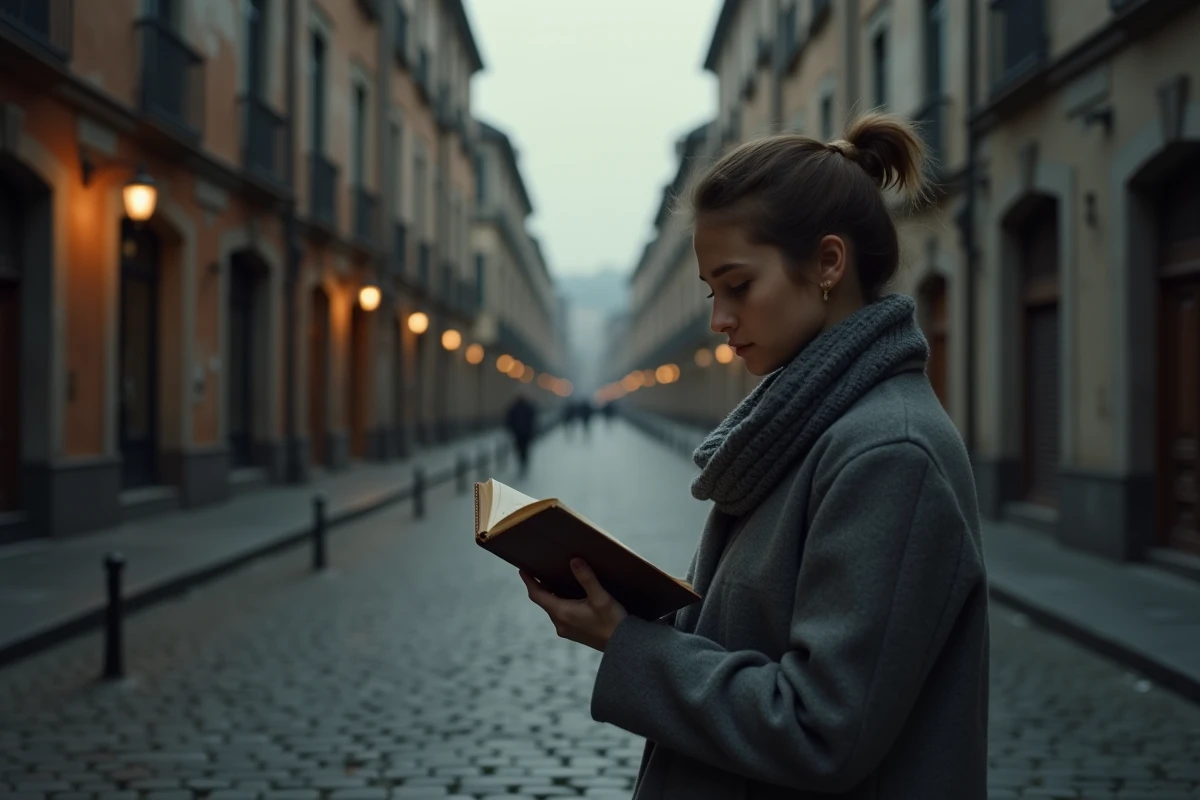
The Franz Kafka Museum in Prague: an immersion into the author’s mind
Wandering through the old town of Prague often leads to the Franz Kafka Museum. The atmosphere changes: the light becomes a co-conspirator of the narrative. Behind the display cases, one discovers manuscripts, letters, photos. The walls come alive with quotes, extracted from the diary or the famous letter to his father. Each object, each page, exposes the meticulous work, the constant doubt, the effort of a writer struggling against himself.
The exhibition is not limited to a collection of memories. It follows an immersive journey: sounds, projections, visual installations make palpable the tension, the claustrophobia, the strangeness of Kafka’s work. Visitors traverse spaces where reality blurs, a direct echo of The Trial or The Castle. The scenography evokes the confusion of bureaucratic corridors, the solitude of Joseph K. in the face of absurdity.
The museum is embedded in the very architecture of Prague, this city that nourished Kafka. Amid narrow alleys and baroque facades, the presence of the writer seems to float, indecipherable. Inside, a sound installation broadcasts Kafka’s voice, striking at the turn of a room, reminding of this constant tug-of-war between silence and speech.
| Address | Cihelna 2b, Malá Strana, 118 00 Praha 1 |
| Hours | Every day from 10 AM to 6 PM |
The visit ends in front of display cases dedicated to Kafka’s international reception, a testament to an echo that resonates from Prague to Paris and far beyond. Even when closed, the book continues to open: it awaits the next reader, ready to get lost in its labyrinths.