
Most admissions to interior architecture schools favor candidates who have matured their project, sometimes after a year of preparatory studies or experience in a related field. However, some post-baccalaureate programs directly accept new graduates, provided they meet specific and often selective criteria.
The courses alternate between highly sought-after public programs and private schools with varied requirements, imposing structural choices at each stage. Before committing, it is important to understand the ramifications of each path and identify options that allow for a coherent journey, without rushing.
Interior Architecture after the Baccalaureate: A Choice That Requires Preparation Without Rush
Stepping into interior architecture right after the baccalaureate is to embark on a demanding and stimulating turn. This sector does not settle for a simple pencil stroke or an aesthetic eye. Here, technique meets boldness and spatial analysis, with each project requiring a fine understanding of usage, materials, and the ergonomics of spaces. The interior architect does not merely redecorate: they rethink the structure, shape daily life, and transform the experience of spaces.
Profiles are diverse. The STD2A baccalaureate introduces design and applied arts very early, while general baccalaureates open other perspectives, especially for those who engage in artistic options, sciences, or mathematics. Holders of a professional baccalaureate often arrive with solid practical experience: reading plans, knowledge of various building materials, pragmatism, and a sense of the concrete. Each path has its specificities, but one constant: anticipate, build a portfolio from the final year, enriched with personal work, sketches, or even an initial internship in the field.
Successfully Navigating Your Orientation in Interior Architecture After the Baccalaureate requires digging into your motivations, confronting your project with the reality of the profession, and multiplying exchanges. Meeting professionals, visiting agencies, and scrutinizing training programs: everything counts to refine your trajectory. Motivation, the desire to understand and observe weigh much more than the original field of study. It is not about rushing in headfirst, but about building your project step by step, relying on experience and curiosity.
What Study Paths Lead to Becoming an Interior Architect?
The path to becoming an interior architect after the baccalaureate unfolds in several routes, all as structuring as they are demanding. There is a genuine range of recognized training programs that adjust to each individual’s profile and ambition. The most direct route? The BTS Study and Realization of Layout (BTS ERA) or the BTS Space Design. With a Bac+2 at stake, these diplomas focus on a technical and concrete approach, addressing drawing, material work, and project management.
Others choose to deepen the creative and conceptual dimension, with the DN MADE (National Diploma of Arts and Design), a three-year program that combines space design, interior architecture, and applied arts. This selective curriculum develops transversal skills and establishes a solid mastery of design tools. Some continue towards the DNA Space Design or opt for a specialization in DSAA Design with a focus on Space or DNSEP with a design option, up to Bac+5, for those aiming for research or advanced expertise.
For those seeking reliable professional recognition, schools approved by the French Council of Interior Architects (CFAI) or UNAID conventioned schools provide a safe reference. Among them: ENSAD, ENSAAMA, or TALM, all accessible via Parcoursup. Admission is not solely based on academic records: the portfolio, the coherence of the project, the ability to translate a personal spatial vision, all come into play. Institutions strive to identify unique profiles capable of inhabiting space differently.
| Degree | Level | Specificities |
|---|---|---|
| BTS ERA | Bac+2 | Technical, layout, professional internship |
| DN MADE | Bac+3 | Space design, applied arts |
| DSAA / DNSEP | Bac+5 | Specialization, openness to research |
Choosing a curriculum recognized by the CFAI or UNAID means opting for training that promotes sustainable professional integration into the world of interior architecture.
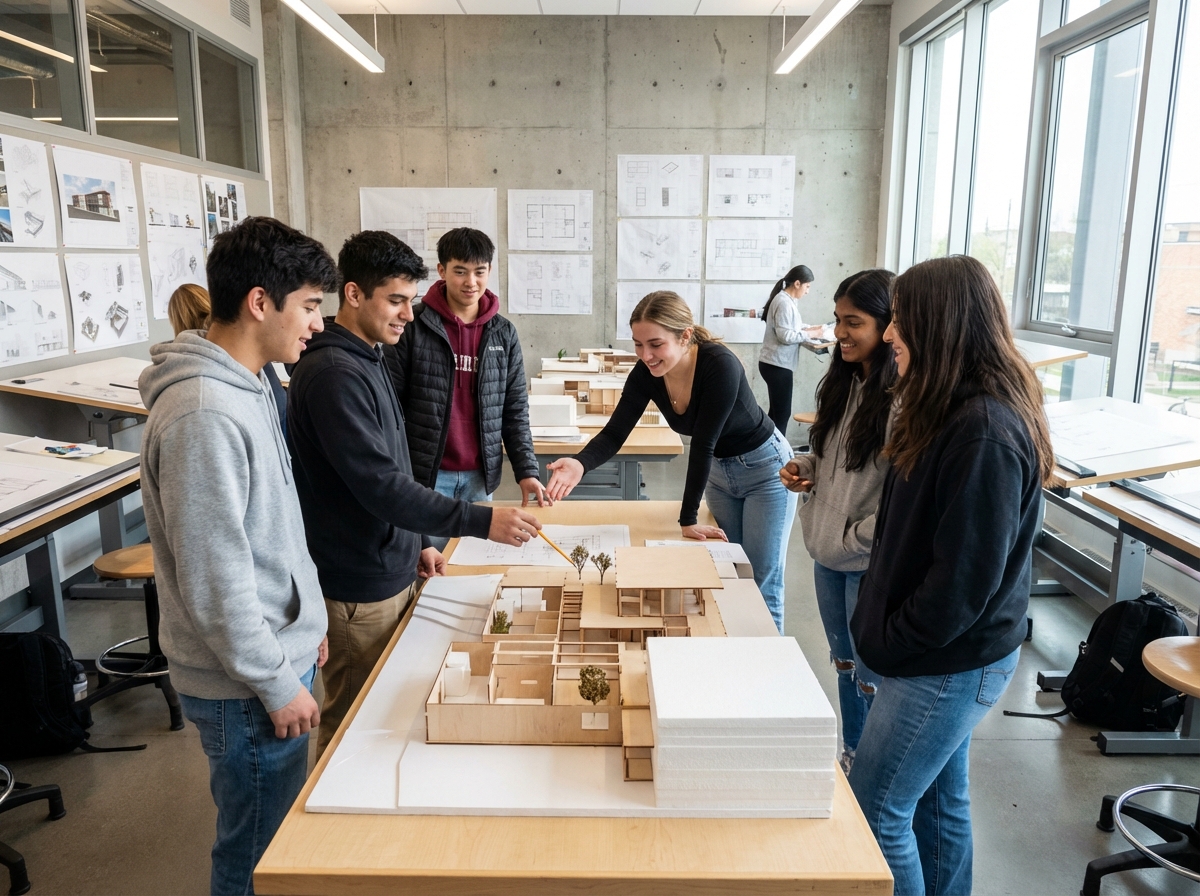
Reorientation, Preparatory Classes, Specialized Schools: How to Find the Path That Truly Suits You
For some, post-baccalaureate reorientation emerges as a step that is as beneficial as it is unexpected. Students coming from a general or technological baccalaureate sometimes discover their vocation for space design through an internship, a personal project, or a meeting. Others, who were still uncertain in their final year, choose to join an artistic preparatory class: a time to strengthen their technical skills, enrich their portfolio, and test their motivation against the reality of the profession. Specialized schools, whether public or private, value the originality of the journey and the uniqueness of the perspective much more than the initial diploma.
The preparatory year acts as a real springboard: it allows for refining graphic skills, opening up to scenography, and familiarizing oneself with CAD/DAO and the main 2D/3D software (AutoCAD, SketchUp, Revit). But nothing replaces concrete experience: internships in agencies, immersion on a construction site, project management, client contact, teamwork. It is in the field that adaptability is forged, through exchanges with artisans and users.
Here are the main levers to build a solid application:
- Mastery of digital tools and design software
- Concrete professional experience: internship, project follow-up, site management
- Development of soft skills: communication, time management, problem-solving
Changing paths is not a step back: it is knowing how to adjust, question oneself, and seize the opportunity to build a project more aligned with one’s aspirations. Versatility is a major asset: project management, observational skills, creativity, and technical skills are sought after. Today, artificial intelligence enriches the tools of the profession and opens new perspectives. The ideal path is shaped at the intersection of experience, reflection, and a taste for the concrete. And for those who dare to take the plunge, every space will become a unique field of expression, to be constantly reinvented.